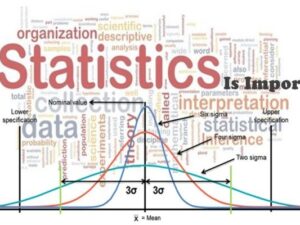
The Complete Data Science Journey: Analyze, Model, Predict — and Deploy AI

- Description
- Curriculum
- FAQ
- Reviews

The Ultimate Path to AI Mastery
Welcome to the most comprehensive Data Science program designed for the modern era. The Complete Data Science Journey is a meticulously crafted roadmap that takes you from absolute ground zero to building advanced Neural Networks and Transformer models.
Whether you are a student, an engineer, or a business professional, this 8-stage journey bridges the gap between theoretical intuition and production-ready AI deployment. This isn’t just a course; it’s your professional transformation.
Why This Is the Only Course You Need
| Program Pillar | Your Career Outcome |
|---|---|
| Full-Stack Curriculum | Master everything from Python automation to Deep Learning architectures. |
| The MasterPlaybook | Access interactive sandboxes to visualize complex math before you code. |
| Real-World Deployment | Don’t just build models; learn to deploy AI into live environments. |
| Industry Mentorship | Learn directly from a Lead Mentor with 12+ years of global analytical experience. |
The 8-Stage Curriculum Roadmap
Module 0: The Python Engine
Foundational Python, automation scripts, and data structures for analytics.
Foundational Python, automation scripts, and data structures for analytics.
Module 1: Statistical Intuition
Master probability and distribution to validate business hypotheses and spot patterns.
Master probability and distribution to validate business hypotheses and spot patterns.
Module 2: Predictive Relationships
Build regression models to forecast sales, pricing trends, and business growth.
Build regression models to forecast sales, pricing trends, and business growth.
Module 3: Classification Logic
The science of “Yes/No” outcomes. Master risk assessment and customer behavior prediction.
The science of “Yes/No” outcomes. Master risk assessment and customer behavior prediction.
Module 4: Tree-Based Decisions
Map complex processes through “Split Points” to optimize workflows and strategic planning.
Map complex processes through “Split Points” to optimize workflows and strategic planning.
Module 5: Pattern Discovery
Learn Clustering to group data by similarities—perfect for market segmentation.
Learn Clustering to group data by similarities—perfect for market segmentation.
Module 6: Neural Networks
Deep Learning foundations, Perceptrons, and implementation using PyTorch.
Deep Learning foundations, Perceptrons, and implementation using PyTorch.
Module 7: Modern AI & Transformers
The world of Large Language Models (LLMs), attention mechanisms, and Generative AI.
The world of Large Language Models (LLMs), attention mechanisms, and Generative AI.
Beyond the Curriculum
Graduate with a portfolio of 10+ industry projects, a professional certification, and the confidence to crack interviews at top-tier global firms.
“Don’t just learn Data Science. Master the journey.”
Module 0 : The Python Builder Track (Foundations & Data Wrangling)
-
1
 Introduction - Data-Driven Leadership: The New Industry Standard
 -
2
Introduction - Why Top Firms Choose Python over Excel
-
3
Introduction - Overview of Python Ecosystem: pandas, NumPy, matplotlib, Jupyter
-
4
Introduction - Setting Up Your Environment (Anaconda, IDEs, Jupyter Notebook)
-
5
Essentials - Python Basics: Variables, Data Types, Loops, Functions
-
6
Essentials - Working with Python Scripts and Jupyter Notebooks
-
7
Essentials - Common Python Libraries for Data Science
-
8
Data Structures - Lists, Tuples, Dictionaries, Sets
-
9
Data Structures - List and Dictionary Comprehensions
-
10
Data Structures - Functions and Lambda Expressions
-
11
Data Structures - Reading from and Writing to Files
-
12
NumPy - Arrays and Operations
-
13
NumPy - Indexing, Slicing, and Reshaping Arrays
-
14
NumPy - Mathematical and Statistical Operations
-
15
NumPy - Random Number Generation and Simulations
-
16
Pandas - Introduction to pandas: Series and DataFrames
-
17
Pandas - Indexing, Filtering, and Selection
-
18
Pandas - Data Alignment, Sorting, and Ranking
-
19
Pandas - Applying Functions and Handling Missing Data
-
20
Import-Export: Reading Data from CSV, Excel, JSON
-
21
Import-Export: Saving Cleaned Data
-
22
Import-Export: Web Data: APIs, HTML, and XML
-
23
Import-Export: Working with Databases (Intro to SQL with pandas)
-
24
Data Wrangling - Handling Missing Values and Duplicates
-
25
Data Wrangling - Data Transformation and Mapping
-
26
Data Wrangling - Binning, Outlier Detection, and Dummy Variables
-
27
Data Wrangling - Working with Text and Regular Expressions
-
28
Data Wrangling - Combining Datasets: Merge, Join, and Concatenate
-
29
Data Wrangling - Pivot Tables and Reshaping DataFrames
-
30
Data Wrangling - Hierarchical Indexing and Multi-Level Aggregation
-
31
Data Visualizaton - Plotting with matplotlib: Line, Bar, Scatter, Histogram
-
32
Data Visualizaton - Advanced Plotting with seaborn: Heatmaps, Pairplots, and Categorical Plots
-
33
Data Visualizaton - Customizing Charts: Legends, Labels, Styles
-
34
Data Visualizaton - Saving and Exporting Visualizations
-
35
Data Operations - Using group by for Data Aggregation
-
36
Data Operations - Applying Multiple Functions
-
37
Data Operations - Pivot Tables and Cross-Tabulations
-
38
Data Operations - Real-World Examples: Weighted Averages, Correlations, and More
Module 1 : Statistical Intuition & Decision Logic
-
39
 Basic Statistical Concepts : Histograms - Preview Lesson
 -
40
Basic Statistical Concepts : Bar Charts vs. Pie Charts - Preview Lesson
-
41
Basic Statistical Concepts : Boxplot - Preview Lesson
-
42
Probability & Distributions : The Normal Distribution
-
43
Probability & Distributions : Mean, Median, Mode for Normal Distribution
-
44
Probability & Distributions : Standard Deviation vs Standard Error
-
45
Probability & Distributions : Estimating Population Parameter
-
46
Probability & Distributions : p-values: Interpretation
-
47
Probability & Distributions : p-values Calculation: Part 1 (Discrete Variables)
-
48
Probability & Distributions : p-values Calculation: Part 2 (Continuous Variables)
-
49
Statistical Testing : Hypothesis Testing - Null Hypothesis
-
50
Statistical Testing : Alternative Hypothesis
-
51
Statistical Testing : ANOVA
-
52
 Statistics Quiz Time! – Understanding Statistics Concepts
 -
53
🕵️♂️ The Data Detective’s Guide: Stats Made Simple
-
54
Advance Stat Concepts : Central Limit Theorem
-
55
Advance Stat Concepts : Bootstrapping
-
56
Advance Stat Concepts : Confidence Intervals
-
57
Advance Stat Concepts : QQ Plots & Quantile Normalization
Module 2 : Supervised Learning: Linear Regression
-
58
Relationship in Data : Covariance - Part 1
-
59
Relationship in Data : Covariance - Part 2
-
60
Relationship in Data : Pearson’s Correlation - Part 1
-
61
Relationship in Data : Pearson’s Correlation - Part 2
-
62
Relationship in Data : R-squared
-
63
Linear Regression : Least Square Method
-
64
Linear Regression : Simple Linear Regression
-
65
Linear Regression : Multiple Regression
-
66
Linear Regression : General Linear Models (GLM) Unlocked (t-test and ANOVA)
-
67
Linear Regression Case Study : Simple Linear Regression
-
68
Linear Regression Case Study : t tests
-
69
Linear Regression Model : Assumptions
-
70
Linear Regression Model : Model Selection using Mallow’ Cp
-
71
Linear Regression Model : Backward and Forward Selection
-
72
Linear Regression Model : Residual Analysis
-
73
Linear Regression Model : Influential Observations Analysis
-
74
Linear Regression Model : Collinearity Diagnostics
-
75
Linear Regression Case Study 2 : Multiple_Linear_Regression.ipynb
-
76
Interview & CV - Guidance
Module 3 : Supervised Learning: Logistic Regression
-
77
Logistics Regression : Expected Values - Discrete
-
78
Logistics Regression : Expected Values - Continuous
-
79
Logistics Regression : Test of Association
-
80
Logistics Regression : Fisher's Exact Test
-
81
Logistics Regression : The Mantel-Haenszel Test (Controlling for Confounders)
-
82
Logistics Regression : Logs
-
83
Logistics Regression : Odds and Log(Odds)
-
84
Logistics Regression : Odds Ratios and Log(Odds Ratios)
-
85
Logistics Regression : Probability vs Likelihood
-
86
Logistics Regression : Maximum Likelihood
-
87
Logistics Regression : Maximum Likelihood - Binomial Distribution
-
88
Logistics Regression : Concept
-
89
Logistics Regression : Coefficients - Continuous
-
90
Logistics Regression : Coefficients - Discrete
-
91
Logistics Regression : Reference Cell and Effect Cell Coding
-
92
Logistics Regression : R Squared and p-value
-
93
Logistics Regression : Concordant and Discordant Pairs
-
94
Logistics Regression : Null Deviance and Residual deviance
-
95
Logistics Regression : FAIQs
-
96
Case Study 3 - Logistics Regression : Real World Case Study
-
97
Model Diagnostics : Bias and Variance
-
98
Model Validation : Cross Validation
-
99
Model Performance : Confusion Matrix
-
100
Model Metrics : Sensitivity & Specificity
-
101
Model Evaluation : ROC and AUC
-
102
Information Logic : Entropy
-
103
Information Logic : Mutual Information
-
104
Regularization : Ridge Regression
-
105
Regularization : Lasso Regression
-
106
Regularization : Elastic-Net Regression
-
107
Regularization : Case Study 4
Module 4 : Unsupervised Machine Learning (Clustering & Dimension Reduction)
-
108
Dimension Reduction : PCA (Principal Component Analysis)
-
109
Dimension Reduction : MDS (Multidimensional Scaling) and PCoA (Principal Coordinate Analysis)
-
110
Dimension Reduction : t-SNE
-
111
Dimension Reduction : UMAP Dimension Reduction
-
112
Dimension Reduction : Heatmap
-
113
Case Study 5
-
114
Clustering : K-Means
-
115
Clustering : DBSCAN
-
116
Clustering : Hierarchical
Module 5 : Supervised Machine Learning Algorithms
-
117
Gradient Descent
-
118
Stochastic Gradient Descent
-
119
K - Nearest Neighbors
-
120
Naive Bayes
-
121
Gaussian Naive Bayes
-
122
Decision Tree : One-Hot, Label, Target and K-Fold Target Encoding
-
123
Decision Tree : Classification Tree
-
124
Decision Tree : Regression Trees
-
125
Decision Tree : Pruning
-
126
Case Study 6
-
127
Random Forest : Build, use and validate
-
128
Random Forest : Missing Data and Clustering
-
129
Case Study 7
-
130
Boosting : AdaBoost
-
131
Boosting : Gradient Boost
-
132
Boosting : XGBoost
-
133
Boosting : Cosine Similarity
-
134
Boosting : CatBoost
-
135
Case Study 8
-
136
Support Vector Machine : Understanding
-
137
Support Vector Machine : The Polynomial Kernel
-
138
Support Vector Machine : The Radial Kernel (RBF)
Module 6: Neural Networks & Deep Learning (Advanced AI)
-
139
Neural Networks: Demystifying Complexity
-
140
Neural Networks: Building Blocks of Neural Architectures
-
141
Backpropagation : Foundations
-
142
Backpropagation : Advanced Backpropagation Techniques
-
143
Activation Functions : ReLU and Its Applications
-
144
Activation Functions : SoftMax and ArgMax for Classification
-
145
Feedforward Networks : Handling Multiple Inputs and Outputs
-
146
Feedforward Networks : Cross-Entropy Loss and Optimization
-
147
Feedforward Networks : Derivative Calculations for Loss Functions
-
148
Convolutional Neural Networks: ConImage Classification with CNNs
-
149
Recurrent Neural Networks (RNNs) : Fundamentals
-
150
Recurrent Neural Networks (RNNs) : Long Short-Term Memory (LSTM) Networks
-
151
Advanced Architectures : Encoder-Decoder Frameworks
-
152
Advanced Architectures : Attention Mechanisms
-
153
Transformer Networks : Architecture
-
154
Transformer Networks : Decoder-Only Models (e.g., GPT-style
-
155
Transformer Networks : Decoder-Only Models (e.g., GPT-style
-
156
Linear Algebra Essentials : Tensor Operations in Neural Networks
-
157
Linear Algebra Essentials : Matrix Algebra for Deep Learning
-
158
Linear Algebra Essentials : Matrix-Based Transformer Implementation
-
159
Neural Networks in Reinforcement Learning
Module 7: Deep Learning in Action (The PyTorch Lab)
-
160
Start with PyTorch – Learn the basics with hands-on, beginner-friendly notebooks.
-
161
Build Your First Neural Net – Code real models using PyTorch + Lightning.
-
162
Handle Complex Data – Work with networks that take multiple inputs and outputs.
-
163
Master CNNs – Create image-based models from scratch.
-
164
Implement LSTMs – Tackle sequential data like time series and text.
-
165
Create Word Embeddings – Learn how machines understand language.
-
166
Explore Autoencoders – Compress and reconstruct data with unsupervised learning.
-
167
Code a Transformer – Build a simplified ChatGPT-style model step by step.
Is this course suitable for complete beginners?
Absolutely! We start from scratch – no math or coding experience needed. Just bring curiosity
Can I pay in installments?
A: Yes! Choose:
• Full payment (5% discount)
• 2-month interest-free installments
• Full payment (5% discount)
• 2-month interest-free installments
How do I get my certificate?
Automatically downloadable from your student dashboard after completing all projects or will be sent to your email ID.
How flexible is the schedule?
Weekend Batch: Sat - Sun (1.5 hr/day as per your convenience)
Is this course online or offline?
This is primarily an online learning program – no need to visit any physical center! Engage, Ask, Learn - Live! However, if you're based in Vadodara and prefer in-person training, we’re happy to arrange offline batches. Just WhatsApp us at +91 92743 73121 to discuss options.
Will I get access to course material after finishing the course?
Yes! You get lifetime access to our premium digital learning vault, which includes:
🎬 AI-Powered Video Library: High-definition video lessons with crystal-clear AI narration for easy, anytime learning.
📊 Interactive Visual Sandboxes: Exclusive access to our proprietary "MasterPlaybook" tools to visualize complex math and data logic in real-time.
🐙 GitHub Repository Access: Lifetime access to our private GitHub repo containing all Python/R code templates and curated industry-grade datasets.
🚀 Project Documentation: Step-by-step guides and "Solution Notebooks" for your 10+ portfolio-ready projects.
📝 Expert Cheat Sheets: Rapid-reference digital guides for statistical formulas and core Machine Learning concepts.
🎬 AI-Powered Video Library: High-definition video lessons with crystal-clear AI narration for easy, anytime learning.
📊 Interactive Visual Sandboxes: Exclusive access to our proprietary "MasterPlaybook" tools to visualize complex math and data logic in real-time.
🐙 GitHub Repository Access: Lifetime access to our private GitHub repo containing all Python/R code templates and curated industry-grade datasets.
🚀 Project Documentation: Step-by-step guides and "Solution Notebooks" for your 10+ portfolio-ready projects.
📝 Expert Cheat Sheets: Rapid-reference digital guides for statistical formulas and core Machine Learning concepts.
How do I enroll and get access to the course?
Purchase: Create an account (or log in), complete the payment, and gain access to the course materials.
Live Sessions: After payment, our team will contact you within 24–48 hours to schedule your live training batches.
Live Sessions: After payment, our team will contact you within 24–48 hours to schedule your live training batches.
Stars 5
1
Stars 4
0
Stars 3
0
Stars 2
0
Stars 1
0